Comprehensive Stroke Rehabilitation in Florida: Modern Recovery Strategies
Stroke has been a cause of a large percentage of chronic disability in the US and early and systematic rehabilitation is important in the recovery process. In Florida, the provision of comprehensive stroke rehabilitation services is still developing through the new models of patient-centered care and the latest line of advanced treatments. Recovery does not just entail the rebuilding of mobility, but also restoration of independence, confidence and quality of life. In this article, it discusses the contemporary stroke rehabilitation practices that will define the recovery outcomes. It also covers how patients can achieve the most out of tailor-made treatment plans.
The Significance of Early Neurorehabilitation
Rehabilitation must commence in the ideal situation that is between 24-48 hours after medical stabilization. Early intervention aids in driving neuroplasticity which enables the brain to restructure and establish new neural connections. An early start is likely to increase the chances of the recovery of motor skills, speech, and cognitive ability.
Florida neurorehabilitation programs focus on multidisciplinary work. Physical therapists, occupational therapists, speech-language pathologists collaborate with the purpose of creating individual recovery routes. This integrated strategy enhances short term achievements as well as long term functional autonomy.
New Treatments that are Changing Recovery
The modern stroke rehabilitation incorporates modern technology of robotic-assisted treatment and virtual reality-based motor training. Robotic machines can assist patients to learn the repetitive movement safely and trace the progress with the specific data records. Virtual reality spaces provide more interactivity and interest in the therapy sessions.
Weakened muscles are also becoming increasingly activated through electrical stimulation therapy. This technique together with task-oriented training enhances muscle re-education and coordination. Such innovations enable therapists to be able to tailor interventions to specific deficits of each patient.
Individualized Care PLANs to Short-term Success
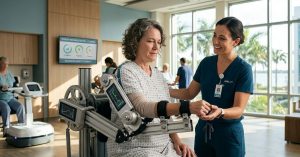
Stroke has a different impact on people and that is why the individualized rehabilitation practice is necessary. Extensive checkups determine mobility, intellectual capacity, language, and emotional state of well-being prior to commencing therapy. The development of treatment goals is then done in collaboration with the patients and their families.
Recurring testing makes therapy adapt to the progress of the patient. The changes are implemented according to the quantifiable results and patient feedback. This solution is adaptive, maximizing the recovery, and conducive to a sustainable independence.
Support of the Family and Community
Rehabilitation is not over in the clinic. The family involvement has a great impact on the outcomes as it strengthens therapy exercises at home. Training of the caregivers will prepare them with the instruments to assist effectively and safely.
Support Groups
Community-based support groups are also a source of emotional support and experiences. Social association assists lessen the sense of isolation that is usual following the stroke. Holistic recovery deals with physical recovery and emotional fortitude.
Conclusion
The innovation and early intervention in stroke rehabilitation in Florida remain progressive in terms of new treatment, as well as on individual care plans. Recent programs are more concerned with neuroplasticity, integration of technology, and multidisciplinary approaches to enhance results. By having effective family support and organized therapy programs, patients can be able to resume productive independence. The prevention of stroke rehabilitation in the present will be the foundation of the recovery of the future.